
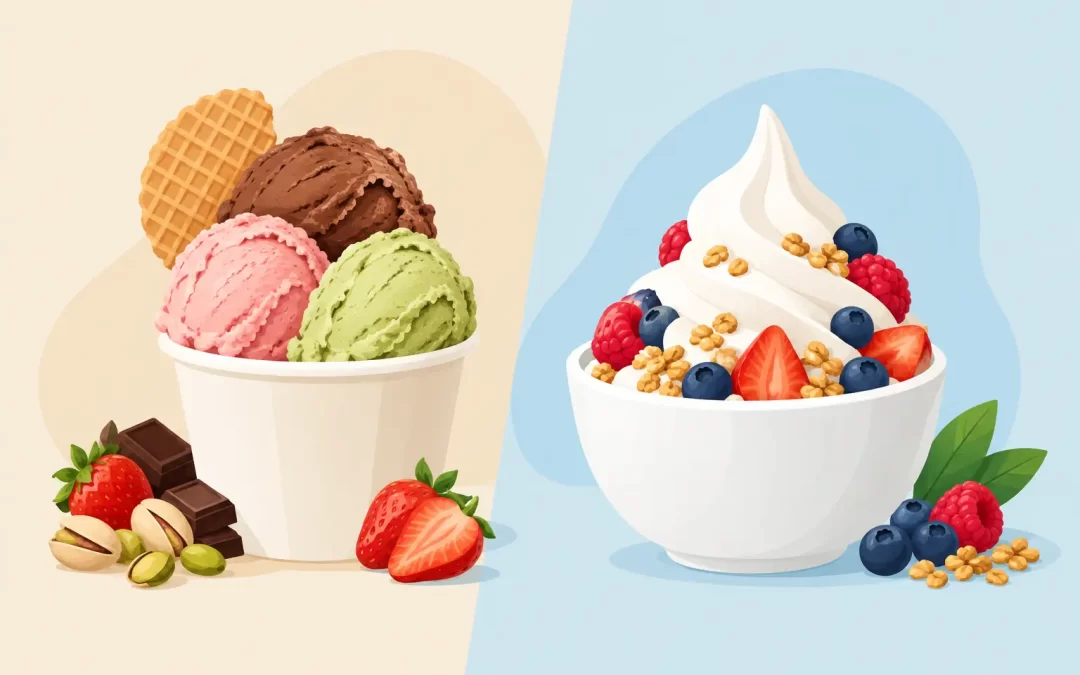
A dessert case can create a very serious little dilemma: do you go for the silky, flavor-packed gelato or the tangy swirl of frozen yogurt piled high with toppings? Gelato versus frozen yogurt is not simply a question of which one has fewer calories. These are two very different frozen treats, made for different kinds of cravings.
One is all about dense creaminess and a slow-melting scoop. The other brings a bright, yogurt-like tang with a lighter finish. Both can absolutely hit the spot, but knowing what sets them apart makes it easier to order the treat you actually want.
Gelato Versus Frozen Yogurt: The Big Difference
Gelato is an Italian-style frozen dessert made with milk, cream, sugar, and flavor ingredients. Compared with traditional American ice cream, gelato is usually made with more milk, less cream, and less air whipped into the mix. That lower air content is called overrun, but you do not need dessert-science vocabulary to notice it. You taste it in the spoon: gelato feels smooth, dense, and richly flavored rather than fluffy.
Frozen yogurt starts with cultured dairy, which gives it its familiar tart note. It may contain milk, cream, sugar, yogurt cultures, and stabilizers, depending on the recipe and brand. It is often served from a machine in a soft, swirled form, though it can also be scooped. The texture is generally lighter and airier than gelato, with a cool tang that plays especially well with fruit, candy, sauces, and crunchy toppings.
Neither is automatically “better.” Gelato is for the person chasing a full-bodied, creamy flavor experience. Frozen yogurt is for the person who likes a refreshing bite and the fun of building a dessert exactly their way.
Why Gelato Tastes So Rich
Gelato’s magic is not about using the most cream possible. It is about balance. Milk provides a clean dairy base, sugar helps create a soft scoop, and careful churning keeps ice crystals tiny. The result is a texture that feels luxurious without needing to be overly heavy.
Because gelato carries less air than many frozen desserts, flavors can come through with real clarity. Pistachio can taste deeply nutty. Dark chocolate can feel intense and fudgy. Mango can taste like actual ripe mango, not a neon mystery. When a flavor is built well, every spoonful has a focused, satisfying finish.
Serving temperature matters too. Gelato is typically served slightly warmer than hard ice cream. That softer temperature lets the texture stay velvety and helps ingredients release more aroma and flavor on the palate. It is why a good scoop can taste so vivid from the first bite.
At Red Velvet Gelato, that means working in small batches with fresh New Zealand milk, natural ingredients, and authentic Italian gelato methods. We do not take shortcuts with artificial flavors or artificial colors, because bold flavor should come from the ingredients themselves. A scoop of saffron pistachio, for example, should be fragrant, nutty, and golden for delicious reasons.
Gelato is made for flavor discovery
If you see a menu with classics beside more adventurous combinations, gelato is a brilliant format for trying something new. Its dense texture gives spices, nuts, fruit, chocolate, and baked elements a chance to shine. Indian-inspired flavors can be especially exciting here, where cardamom, rose, paan, cashew, or saffron can feel celebratory rather than lost behind a wall of sugar.
That does not mean every gelato flavor needs to be unexpected. Sometimes a proper cookies and cream, strawberry, or chocolate scoop is exactly the move. The point is that the base should support the flavor, not distract from it.
What Makes Frozen Yogurt Different
Frozen yogurt’s defining characteristic is its tang. Yogurt cultures create a lightly sour, refreshing note that cuts through sweetness, especially when paired with fruit. If creamy gelato feels like settling into a dessert moment, frozen yogurt often feels brisker and more playful.
It also has a strong self-serve association. Choose your swirl, then add berries, mochi, cookie pieces, sprinkles, chocolate drizzle, crushed nuts, or whatever catches your eye. That freedom is part of the appeal. Frozen yogurt can be a quick after-school treat, a movie-night stop with friends, or an easy dessert for people who all want different things.
Still, the “yogurt” label deserves a reality check. Frozen yogurt is not automatically a health food, and gelato is not automatically an over-the-top choice. Recipes vary widely. Some frozen yogurts are lower in fat but higher in added sugar. A bowl that starts light can become a very generous dessert once it is loaded with candy, syrups, and cheesecake bites. There is nothing wrong with that, of course. It is dessert. Just choose it because it sounds delicious, not because the name made a promise.
The toppings change the whole experience
With frozen yogurt, toppings are often half the event. Fresh fruit and toasted nuts can keep things bright and textured. Brownie chunks, cookie crumbs, and caramel sauce take it in a richer direction. The best combination usually has contrast: something creamy, something crunchy, and either a fruity or chocolatey accent.
Gelato can wear toppings beautifully too, but it does not need a mountain of them. A warm Belgian waffle, a fudgy brownie, or a crisp bubble waffle creates enough contrast while allowing the scoop to remain the star. When the gelato has been made with care, you want to taste it.
Which One Has Fewer Calories?
There is no honest one-line answer. Calories, fat, sugar, and protein depend on the recipe, serving size, and what goes on top. Gelato may be lower in fat than traditional ice cream because it often uses more milk than cream. Frozen yogurt may be lower in fat in some versions, but that does not guarantee lower sugar or a lighter final order.
Portion size matters more than dessert labels. A small cup of frozen yogurt with strawberries is different from a large cup with several sauces and candy toppings. A modest gelato scoop can feel deeply satisfying because it is dense and flavorful, while a larger serving may be perfect for sharing over waffles or sundaes.
If dietary needs are part of the decision, read ingredient and allergen information closely. Frozen yogurt contains dairy unless it is specifically made dairy-free, and gelato commonly contains dairy as well. Nut flavors may contain nuts, and cookies, brownies, or waffle cones may contain gluten. Sorbet can be a wonderful fruit-forward option, but it is still worth checking the recipe if you have allergies or dietary restrictions.
Choose by Your Craving, Not the Label
Pick gelato when you want an intense flavor, a creamy slow-melting texture, or a scoop that feels like a proper dessert on its own. It is a lovely choice after dinner, alongside a warm waffle, blended into a shake, or packed into a take-home tub for later.
Choose frozen yogurt when tanginess sounds refreshing and you want to play dessert designer with plenty of toppings. It is also great when a group wants a casual, customizable treat without everyone ordering the same thing.
And if you are choosing for kids, date night, or a catch-up with friends, think about the occasion. A bright frozen yogurt creation can be fun and fast. A pair of gelato cups, a shared brownie, and a bubble waffle can turn dessert into the plan itself.
The best frozen treat is not the one with the cleverest label. It is the one that makes you pause after the first spoonful and think, yes, that was exactly what I wanted. Follow the craving, choose ingredients that taste real, and leave room for one more bite.